Shopify vs WooCommerce for a store with 500+ products
Once a store passes a few hundred products, the differences between Shopify and WooCommerce stop being about price and start being about structure: variants, filters, bulk editing, speed and how customers find the right product. Here is how they compare.
 By Asim Baloch, Founder of Tangle Logics
Updated · 4 min read

The short answer
Both platforms can run a store with thousands of products. The right choice depends on what kind of catalogue you have:
- Shopify suits large catalogues of fairly straightforward products, such as fashion, beauty, homeware and accessories, where speed, reliability and an easy admin matter most.
- WooCommerce suits technical or complex catalogues: products with many attributes and specifications, wholesale pricing, product finders, multiple languages, or a lot of content around the products.
Variants and options
This is often the deciding factor for large catalogues.
- Shopify allows up to 2,048 variants per product, on every plan, since Shopify raised the limit from 100 in 2025. But each product can still have only three options, such as size, colour and material. A product that needs a fourth option has to be split into separate products or have two options combined into one.
- WooCommerce has no fixed limit on attributes or variations. A product can have as many attributes as it needs, which suits technical products such as tools, parts and equipment. The practical limit is performance: products with hundreds of variations need good hosting and careful set-up.

Helping customers find the right product
With 500 or more products, navigation becomes the most important part of the store.
- Shopify offers collections that can fill themselves automatically from rules, and filtering through Shopify's free Search & Discovery app. It works well for filters such as colour, size, price and availability.
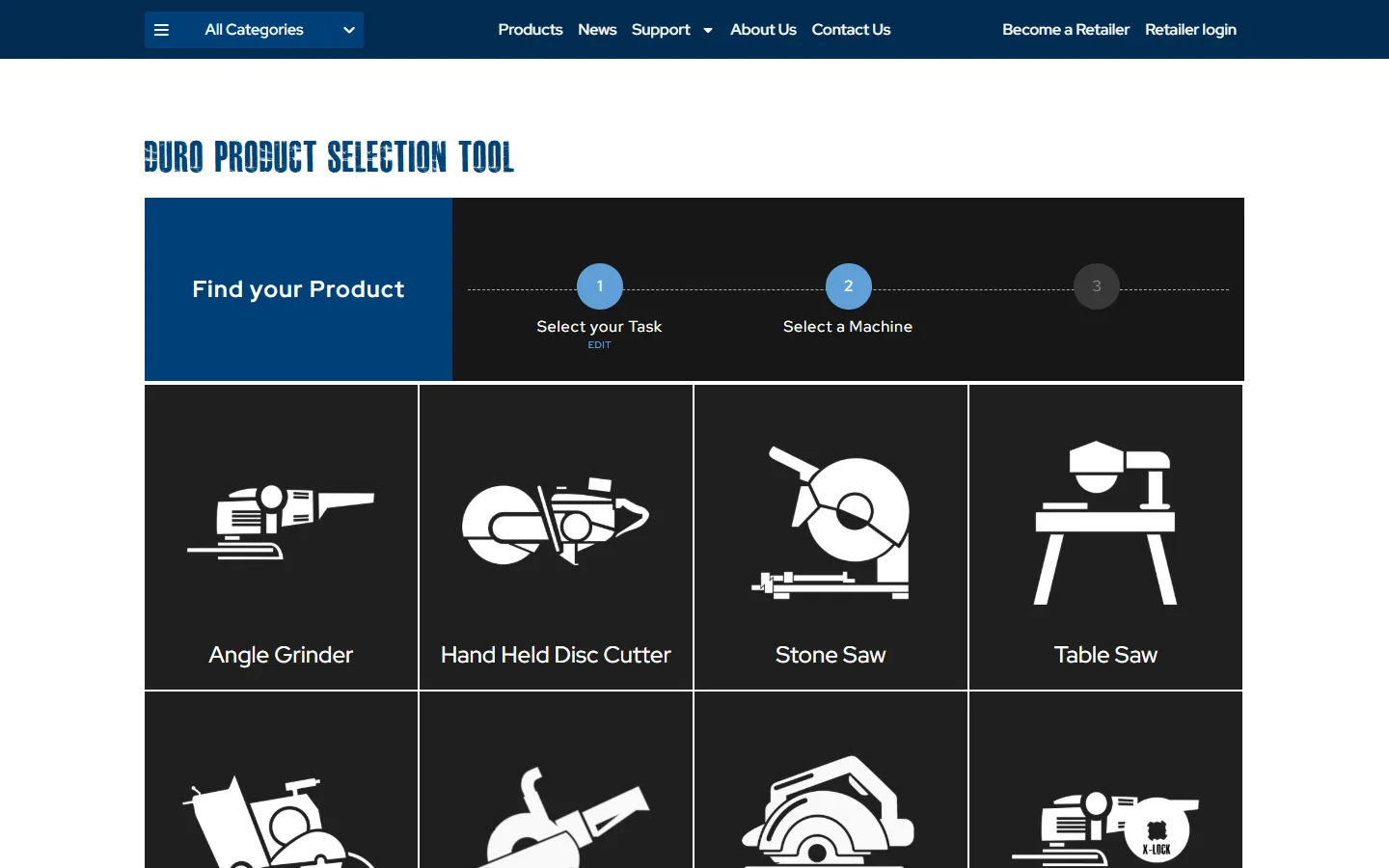
- WooCommerce can filter by any attribute, and can be extended with custom tools. For a technical range, a guided product finder that asks a few questions and shows only the matching products can work better than any menu.

Bulk editing and imports
- Shopify imports and exports products by CSV, and its bulk editor handles price, stock and other changes across many products. Apps such as Matrixify handle more complex imports and updates.
- WooCommerce also imports and exports by CSV, and its data sits in your own database, so developers can automate updates from a supplier feed or an inventory system directly.
For a catalogue that changes every week, plan how products will be updated before choosing the platform. It is often the biggest ongoing cost.
Speed with a large catalogue
- Shopify is hosted on Shopify's own infrastructure, so performance does not depend on your hosting plan. A large catalogue on Shopify stays fast as long as the theme and apps are kept lean.
- WooCommerce speed depends on your hosting and how the site is built. A large WooCommerce store needs quality hosting, caching and a well-built theme. Done properly it is fast; on cheap hosting it will not be.
Wholesale and B2B
Large catalogues often serve trade customers as well as the public.
- Shopify includes B2B features such as company accounts and catalogues with their own prices, with more catalogues and options on Shopify Plus.
- WooCommerce handles wholesale pricing, trade accounts, minimum order quantities and quote requests through plugins or custom development, and can be shaped around exactly how your trade customers order.
Multiple languages and markets
- Shopify supports translations, local currencies and local domains through Shopify Markets.
- WooCommerce uses translation plugins, and can translate everything, including custom features and product data, with full control over each language version.
Duro's catalogue is available in English, Dutch and French, including its product finder and specifications.

Cost at scale
- Shopify: the plan, payment fees on every sale, and apps. Large stores often need several paid apps for filtering, bulk editing, B2B and reviews.
- WooCommerce: better hosting, premium plugins and ongoing maintenance, but no platform fee on sales.
As a rough rule, high-volume stores selling simple products often find Shopify's total cost worth it, while stores with complex products and custom needs often find WooCommerce cheaper over time.
Which should you choose?
- Fashion, beauty, homeware or gifts, with up to three options per product: Shopify
- Tools, parts, equipment or anything with many specifications: WooCommerce
- Products that need a guided finder or compatibility checks: WooCommerce
- Heavy wholesale or trade ordering: either, depending on how custom it needs to be
- Several languages with custom features: WooCommerce
- A small team that wants the least technical work: Shopify
Planning a new website?
Send us your current site or your idea. We reply within 24 hours with the recommended approach, timeline and a fixed quote.
Planning a large catalogue?
Tell us about your products and how your customers choose them. We'll reply within 24 hours with our recommendation, a timeline and a fixed quote.